
This article is based on research and personal experience as a Vizsla owner. I’m not a qualified vet, trainer, or dog behaviourist. Itsavizsla.com does not provide veterinary advice.
Vizsla mixes turn up constantly at shelters and rescues. Some arrive as accidental litters, a gate left open or a stud dog from down the road. Others are deliberately bred designer dogs. Either way, if you’re considering one, or you’ve already rescued a dog that looks part-Vizsla and you’re trying to work out what you’ve got, knowing what to expect from the mix matters enormously.
This guide covers 25 Vizsla crossbreeds. For each one, I’ve included what the Vizsla brings to the pairing, what the other parent introduces, and what you’re realistically likely to end up with in terms of size, temperament and exercise demands.
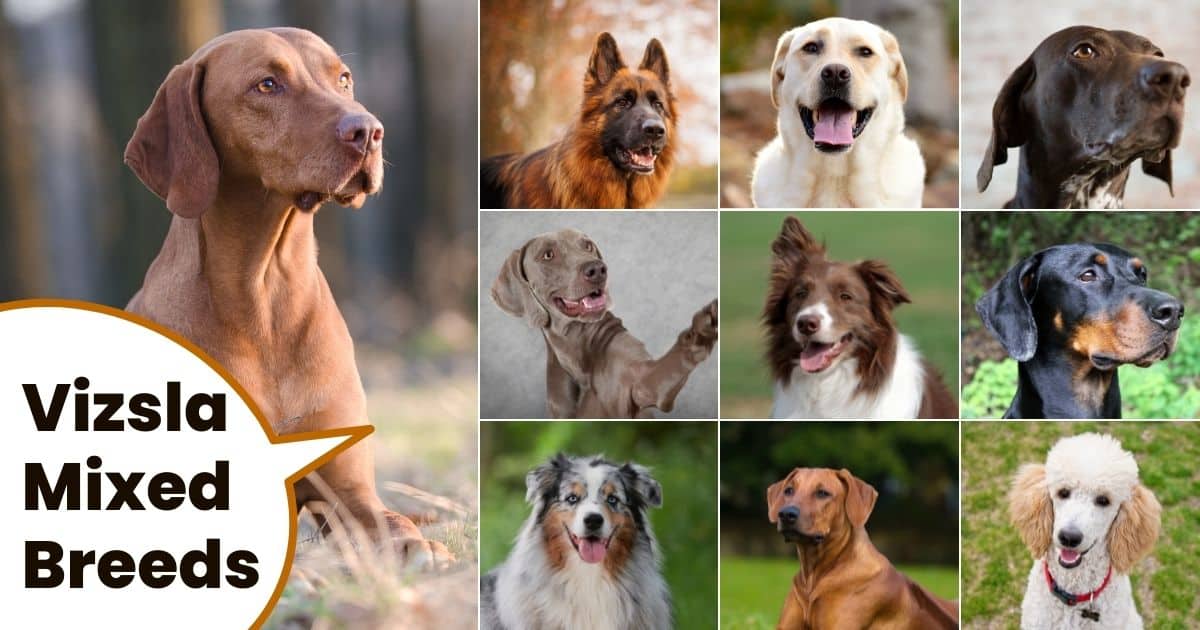
Table of Contents
Before We Dive In: Three Things True of Almost Every Vizsla Mix
Temperament is never guaranteed. Purebred Vizslas have one of the most predictable personalities in the gundog world, velcro dogs, emotionally sensitive, and intensely bonded. Add a second breed, and that predictability evaporates. Littermates from the same cross can look and behave completely differently.
Meet the parents if at all possible. With accidental litters (common in Vizslas), visiting both the dam and the sire tells you more about likely size and temperament than any guide ever can.
Budget for a wide size range. Even between two medium-sized parents, Vizsla mixes can land anywhere on the spectrum. Don’t buy the crate, harness or food plan before your dog has finished growing.
Our purpose in this guide is to describe common Vizsla mix dog breeds to help those who are adopting Vizsla rescues or buying a Vizsla mix puppy from an unplanned litter.
What Is a Vizsla?
Every Vizsla mix inherits from the same base: a Hungarian hunting dog with over 1,000 years of selective breeding behind them.
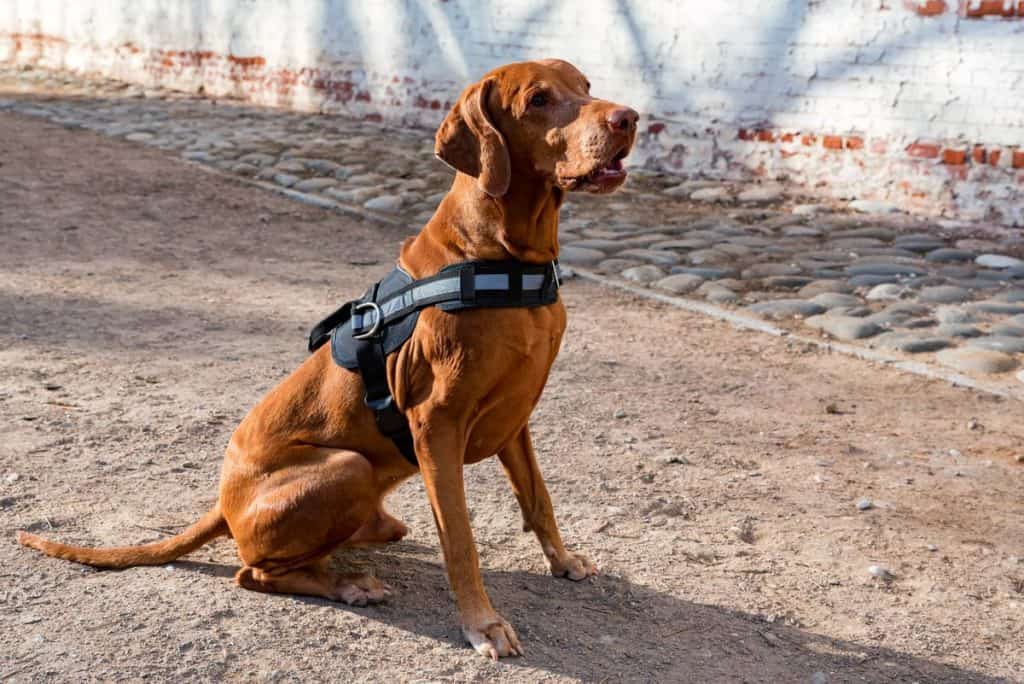
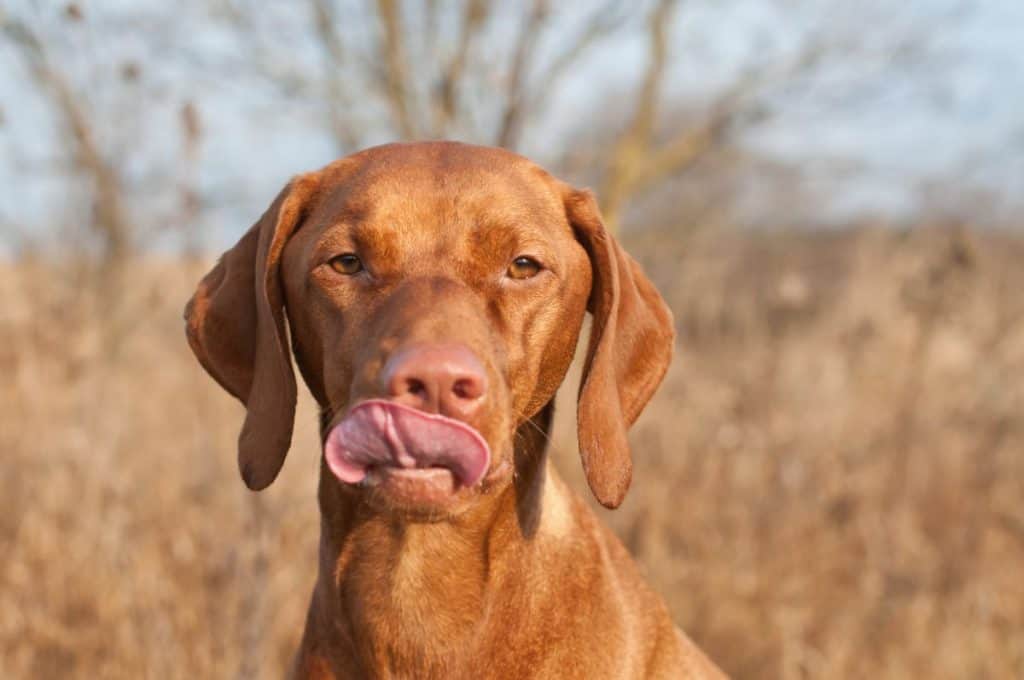
The purebred Vizsla is medium-to-large, typically 44–60 cm at the shoulder and 18–29 kg. They have a short single golden-rust coat, a lean, muscular build, and long floppy ears. In modern life, they’re primarily companion dogs, but companions with high exercise demands, a powerful nose, and an intense need to be near their people.
The traits most likely to carry into any Vizsla mix:
- High daily exercise needs (usually 1.5–2+ hours).
- Strong human bonding and susceptibility to separation anxiety.
- Prey drive from pointing and retrieving heritage.
- High intelligence and trainability.
- Emotional sensitivity, harsh correction backfires.
Any Vizsla cross will likely carry some version of this. The second parent either amplifies those traits, moderates them, or layers something new on top.
25 Vizsla Mixes
1. Vizsla Lab Mix (Vizslador / Labrala)

Parents: Hungarian Vizsla + Labrador Retriever
The Vizslador is one of the most common Vizsla crosses and one of the most successful. Both the Vizsla and Lab are retriever-type dogs with high intelligence, a love of water and an affectionate people-focused nature. They’re a natural pairing.
The Lab’s slightly calmer, food-motivated temperament rounds off the Vizsla’s emotional intensity, producing a dog that’s typically very trainable and sociable. Coat colour ranges from golden rust to chocolate, depending on the Lab parent. Worth noting: the TSA uses Vizsladors as detection dogs because of their exceptional scent skills.
Size: Medium-large. Typically 22–37 kg and up to 63 cm.
Exercise: High. Expect 90+ minutes of active exercise daily.
Best for: Active families, outdoor enthusiasts.
Watch out for: Hip dysplasia risk from both parent breeds. Labs love food, and weight gain is a real risk as they age.
See our full guide to the Vizsla Lab mix and their traits here
2. Vizsla Beagle Mix (Veagle)
Parents: Hungarian Vizsla + Beagle
A mix of two very different-sized hunting dogs. The Beagle is a compact scent hound; the Vizsla a pointer-retriever. What you get is a medium-sized dog with an exceptional nose from both sides and serious energy.
The Beagle brings a stubborn, nose-led streak that can conflict with the Vizsla’s eagerness to please. Recall training is essential from day one. Beagles are notorious escape artists, and that trait can absolutely carry through. Colour ranges widely: brown, red, black and tan, white and rust.
Size: Medium. Usually 10–22 kg, smaller than a purebred Vizsla.
Exercise: High. At least an hour of structured exercise daily, plus scent games and nose work.
Best for: Active owners who enjoy training and have a securely fenced garden.
Watch out for: The Beagle’s wandering instinct. Off-lead recall needs serious investment.
Read our full guide to the Vizsla beagle cross here.
3. Vizsla German Shorthaired Pointer Mix (Vizsla GSP)
Parents: Hungarian Vizsla + German Shorthaired Pointer
This is the cross most often mistaken for a purebred of either parent. Vizslas and GSPs are nearly identical to look at lean, athletic, short-coated gundogs with a similar frame. The GSP is typically slightly larger and broader.
Both breeds are high-drive, people-focused hunting dogs. The GSP tends to be marginally more independent and physically robust. The mix is usually an extremely athletic, energetic dog with excellent stamina. One key note: GSP Vizslas are generally more trainable and slightly less emotionally needy than a purebred Vizsla, which some owners find easier to manage.
Size: Medium-large. Typically 25–35 kg.
Exercise: Very high. Both were bred as all-day hunting dogs.
Best for: Hunters, runners, cyclists, and very active households.
Watch out for: Separation anxiety is still likely, even with the GSP’s more independent streak. Deep-chested monitor for bloat.
See our full guide to the Vizsla German Shorthaired Pointer mix dog here.
Don’t confuse with the Hungarian Wirehaired Vizsla, which is a separate recognised breed.
4. Vizsla Weimaraner Mix (Vizmaraner)
Parents: Hungarian Vizsla + Weimaraner
Two of Europe’s great gundog breeds are remarkably similar in temperament and build. They’re not related, but the cross is consistent and predictable. The Vizmaraner is typically a large, sleek, athletic dog with strong prey drive and high intelligence. Coat colour can go either way — the silver-grey of a Weimaraner or the golden-rust of a Vizsla, or various mixes.
Weimaraners are sometimes described as “the dog with the human brain”, brilliant and often wilful. The Vizmaraner inherits that thoughtfulness, and with it, the capacity for serious mischief if under-stimulated.
Size: Large. Expect 27–40 kg and 60–70 cm at the shoulder.
Exercise: Very high. One of the most demanding mixes in terms of daily output.
Best for: Experienced owners with active lifestyles and space.
Watch out for: Boredom is genuinely destructive with this mix. Mental stimulation matters as much as physical exercise.
5. Vizsla Rhodesian Ridgeback Mix

Parents: Hungarian Vizsla + Rhodesian Ridgeback
Two hunting breeds from opposite ends of the world. The Vizsla is a European bird dog; the Ridgeback was developed in Southern Africa to track large game. The resulting mix is powerful, loyal, and commands attention.
Ridgebacks are more independent and protective than Vizslas, reserved with strangers, whereas the Vizsla is typically open and friendly. The mix can be a deeply bonded, affectionate dog at home, but with more confidence and fewer emotional needs than a purebred Vizsla. Prey drive is high in both parents and compounded in the mix.
Size: Large. Ridgebacks outsize Vizslas significantly; most adults are 30–45 kg.
Exercise: High. Both are endurance athletes built for sustained effort.
Best for: Experienced owners comfortable handling strong, independent dogs.
Watch out for: Prey drive combined with size and speed. Off-lead in unfenced areas is genuinely risky.
See our full guide to the Rhodesian Ridgeback Vizsla mix dog here.
6. Vizsla Doberman Mix (Vizslamann)
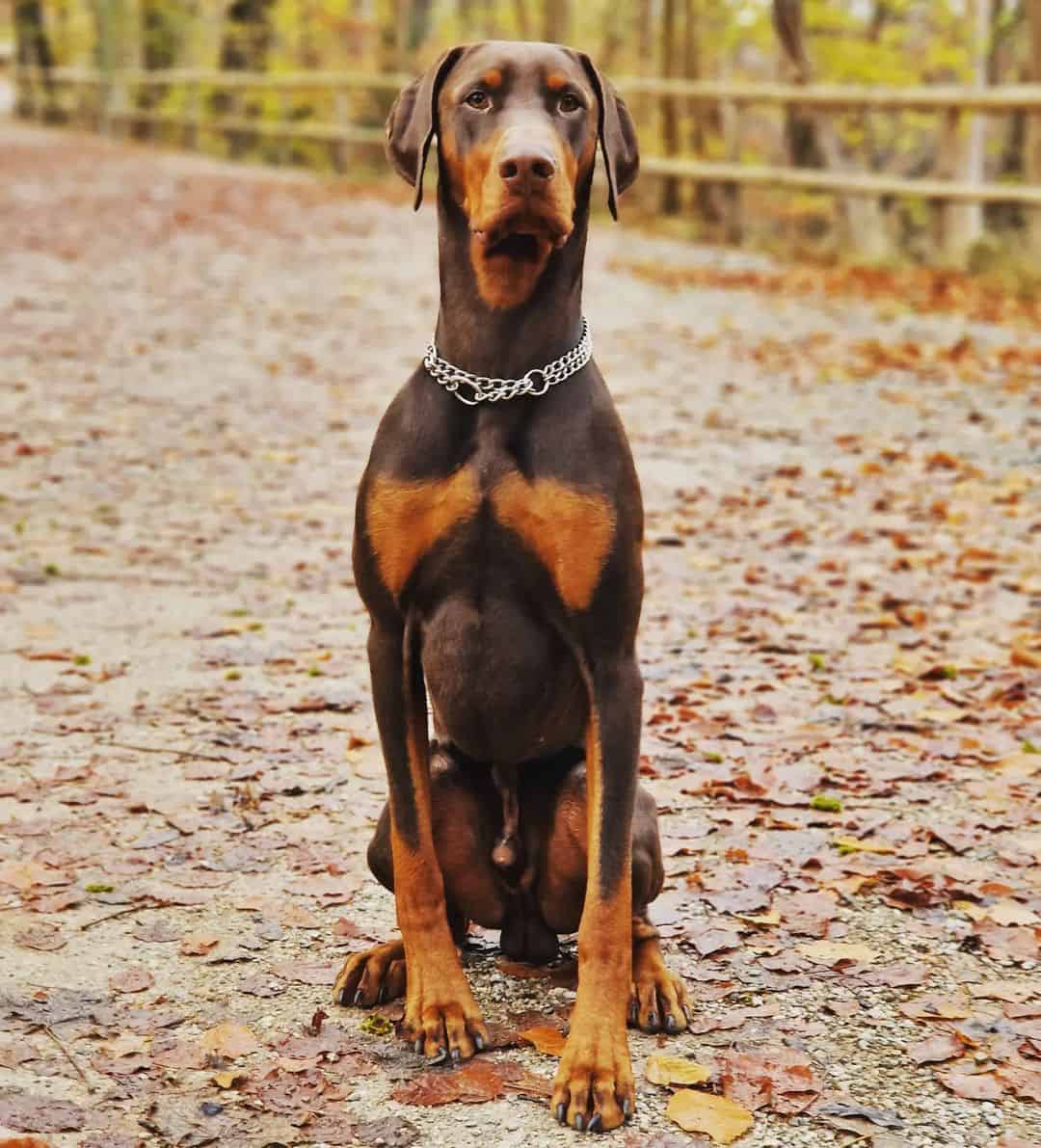
Parents: Hungarian Vizsla + Doberman Pinscher
An athletic, intelligent pairing that combines the Vizsla’s affectionate nature with the Doberman’s watchful, protective temperament. The Vizslamann tends to be a large, lean, powerful dog, devoted to its family, more discerning with strangers than a purebred Vizsla. Trainability is high in both parents; this mix tends to be quick to learn and eager to work.
Size: Large. Typically 30–45 kg and up to 70 cm.
Exercise: High. The Doberman is a working breed with significant daily needs.
Best for: Experienced owners wanting a loyal, capable companion dog.
Watch out for: Dilated cardiomyopathy (DCM) is a known Doberman health concern. Worth discussing proactively with your vet.
You can read our full guide to the Vizsla Doberman Mix here.
7. Golden Vizsla (Vizsla Golden Retriever Mix)
Parents: Hungarian Vizsla + Golden Retriever
Two of the most popular family dogs in the world. The Golden Retriever is famously patient, gentle and easy-going; the Vizsla brings energy and intensity. The Golden Vizsla tends to sit in between: warm and people-loving but somewhat more settled than a purebred Vizsla after exercise.
This is one of the more balanced crosses on this list. First-time dog owners will generally find this mix more manageable than most Vizsla crosses, while still getting a dog with real energy and character.
Size: Medium-large. Typically 25–35 kg.
Exercise: High, but recovers and settles more easily than some other Vizsla mixes.
Best for: Families with children, first-time owners comfortable with a high-energy dog.
Watch out for: Both breeds are prone to hip dysplasia; health-tested parents matter here.
8. Vizsla Poodle Mix (Vizsladoodle)

Parents: Hungarian Vizsla + Poodle
Standard Poodles are exceptional working dogs in their own right, highly intelligent, athletic, and strong retrievers. Combined with the Vizsla, the Vizsladoodle is usually an outstanding candidate for dog sports like agility and obedience. Don’t let the Poodle’s reputation fool you — this is a very active dog.
Coat type varies hugely: some Vizsladoodles are curly and lower-shedding; others inherit a straighter coat closer to the Vizsla’s. If allergies are your reason for choosing this cross, spend time with the individual dog before committing.
Size: Varies by Poodle parent. Standard crosses are typically 20–35 kg. Miniature crosses produce a smaller dog.
Exercise: High.
Best for: Active families wanting trainability and lower-shedding potential.
Watch out for: Coat inheritance is unpredictable. Not all Vizsladoodles are low-shed.
See our full guide to the vizsla poodle mix dog here.
9. Vizsla Boxer Mix (Bozsla)
Parents: Hungarian Vizsla + Boxer
Two energetic, people-focused dogs that love to play. Boxers are clownish and devoted; Vizslas are sensitive and driven. Together, the mix is typically high-energy, expressive and deeply bonded, often described as a permanent puppy in a large athletic body.
Both parents are muscular, so the Bozsla tends to be solid and powerful despite being medium-large in height. They’re generally good with children, but their enthusiasm means supervision is important around small kids.
Size: Medium-large. Typically 20–32 kg. Parents are similar in height, so size is reasonably predictable.
Exercise: High.
Best for: Active households and families who want an exuberant companion.
Watch out for: Boxers are brachycephalic (short-nosed), and some mixes inherit respiratory sensitivity in heat. Monitor carefully in hot weather.
10. Vizsla Whippet Mix (Vizsla Whip / Whizsla)
Parents: Hungarian Vizsla + Whippet
An elegant, athletic pairing. Vizslas can reach 40 mph at full sprint; Whippets hit around 35 mph. The Vizsla Whip is one of the fastest mixed-breed dogs you’re likely to encounter. Both breeds are sensitive, affectionate, and low-maintenance in terms of grooming.
Whippets are quieter and somewhat lower-key than Vizslas at rest. This can moderate the Vizsla’s emotional intensity without sacrificing the athleticism. The result is usually a sleek, loving, fast dog that’s slightly calmer in the house than a purebred Vizsla.
Size: Medium. Whippets are smaller and lighter than Vizslas, weighing 15–28 kg.
Exercise: High. Speed needs outlet running, fetch, lure coursing are ideal.
Best for: Active owners wanting an athletic dog that’s manageable indoors.
Watch out for: Strong prey drive from both sides. Cats and small animals are at risk off-lead.
11. Vizsla Dachshund Mix
Parents: Hungarian Vizsla + Dachshund
One of the more unusual crosses on this list. The Dachshund brings tenacity, bravery and a strong opinion about everything, a marked contrast to the Vizsla’s sensitivity. Physical appearance varies enormously depending on whether the Dachshund parent is standard or miniature, and smooth, wire or longhaired.
This is one of the hardest crosses to predict. Some take heavily after the Vizsla; others clearly lean Dachshund. What you can expect either way: a dog that follows you from room to room and has a strong prey drive.
Size: Unpredictable. Anywhere from 8–22 kg, depending on which Dachshund type is involved.
Exercise: Moderate to high, more manageable than most Vizsla mixes.
Best for: Owners who want something more compact with some Vizsla personality.
Watch out for: Spinal issues. If the mix inherits a long-backed body shape from the Dachshund parent, intervertebral disc disease (IVDD) is worth monitoring.
12. German Shepherd Vizsla Mix
Parents: Hungarian Vizsla + German Shepherd
A hardworking, loyal cross with plenty of energy. Both parent breeds are intelligent working dogs that thrive with structure and purpose. The German Shepherd brings courage, protective instinct, and a denser double coat, something the short-coated Vizsla parent doesn’t share, so shedding can be significant.
The mix usually has a muscular, athletic build and needs a job to do. Homes without space or time to train this dog properly will find them challenging.
Size: Large. German Shepherds are bigger than Vizslas, expect 28–40 kg.
Exercise: Very high.
Best for: Experienced owners who enjoy active training and have outdoor space.
Watch out for: Shedding can be heavy. Hip dysplasia is a concern in both parent breeds.
13. Vizsla Staffordshire Bull Terrier Mix (Vizsla Staff)
Parents: Hungarian Vizsla + Staffordshire Bull Terrier (or American Staffordshire Terrier)
A playful, affectionate cross that combines the Vizsla’s people-focus with the Staffy’s muscular build and clownish personality. Staffies are often described as “nanny dogs” devoted to children and loyal to their family. The Vizsla brings the energy and sensitivity.
The mix tends to be medium-sized, powerful and enthusiastic, excellent with their family, but requiring proper socialisation with other dogs, especially given the Staffy’s sometimes dog-selective nature.
Size: Medium. Typically 18–28 kg.
Exercise: High.
Best for: Active families who will invest in socialisation and training.
Watch out for: Dog-on-dog socialisation needs careful management from puppyhood if the Staffy parent’s selective tendencies carry through.
14. Vizsla Collie Mix

Parents: Hungarian Vizsla + Border Collie or Rough Collie
Two of the most intelligent dog breeds in the world, and the cross reflects that. This is a dog that needs to think. Without sufficient mental and physical stimulation, this mix can become anxious, destructive, or develop compulsive behaviours.
The Border Collie brings a herding instinct that can manifest as chasing, nipping or circling other pets and children. The Rough Collie is typically gentler but still highly intelligent.
Size: Medium. Border Collie crosses typically 18–27 kg.
Exercise: Very high. One structured walk a day is not enough.
Best for: Dog sports enthusiasts — agility, flyball, herding trials. Owners who enjoy active, engaged training.
Watch out for: Herding instinct and the obsessive tendencies some Border Collies carry. This mix needs purpose.
15. Vizsla Great Dane Mix (Great Vizsla)
Parents: Hungarian Vizsla + Great Dane
A striking size mismatch on paper, but this cross does occur. The Great Dane introduces sheer scale. The result is a large to very large dog with the Vizsla’s lean frame scaled up significantly. Great Danes are gentle giants: calm, devoted and lower-energy than most breeds their size.
The mix can moderate the Vizsla’s intensity considerably. Great Danes are significantly lower-energy than Vizslas; the result is often a large, affectionate dog that’s somewhat less demanding than a purebred Vizsla in terms of daily exercise.
Size: Large to very large. Expect 35–55 kg.
Exercise: Moderate to high.
Best for: Owners who want a large, gentler companion and have appropriate space.
Watch out for: Bloat is a serious risk in deep-chested giant breeds. Joint health needs monitoring.
16. Vizsla Corgi Mix
Parents: Hungarian Vizsla + Pembroke or Cardigan Welsh Corgi
An unusual cross that produces a compact but energetic dog. Corgis are working dogs built low to the ground, originally herding cattle. They’re spirited, intelligent and surprisingly athletic. The Vizsla brings additional energy and bonding intensity.
Appearance varies widely; some inherit the Corgi’s short legs, others get the Vizsla’s longer frame. Personality usually includes the Corgi’s bold, sometimes bossy nature alongside the Vizsla’s affection.
Size: Small to medium. Typically 12–22 kg depending on inheritance.
Exercise: Moderate to high.
Best for: Active owners wanting a more compact mixed breed with real personality.
Watch out for: If the mix inherits the Corgi’s low-slung body, disc problems and joint stress warrant monitoring.
17. Vizsla Bloodhound Mix
Parents: Hungarian Vizsla + Bloodhound
Two breeds with exceptional noses, but very different working styles. The Vizsla is a fast-moving pointer-retriever; the Bloodhound is a slow, methodical trailing hound. The cross can go either way in terms of working style, but scenting ability will be formidable in either case.
Bloodhounds are famously stubborn and independent. The Vizsla’s eagerness to please moderates this somewhat, but don’t expect the consistent trainability you’d get from a Vizsla-Lab cross.
Size: Large. Bloodhounds are significantly bigger than Vizslas, weighing 35–50 kg.
Exercise: Moderate to high.
Best for: Owners interested in scent work, nose work, or tracking activities.
Watch out for: Ear infections in dogs with pendulous ears are common. Bloat risk in deep-chested dogs.
18. Vizsla Greyhound Mix
Parents: Hungarian Vizsla + Greyhound
Speed meets speed. Both breeds are built for athleticism. Greyhounds are famously the world’s fastest dogs, but are often lower-energy at home than people expect. They’re sprinters, not endurance athletes. The Vizsla brings more sustained energy and intensity.
The mix tends to be sleek, lean and fast, with a prey drive that makes off-lead exercise in unfenced areas genuinely risky. At home, the Greyhound’s calm, couch-loving tendencies can temper the Vizsla’s restlessness slightly.
Size: Large. Greyhounds are taller than Vizslas, expect 25–38 kg.
Exercise: High in short bursts. Daily sprint opportunity plus regular walking.
Best for: Owners with secure outdoor space or access to enclosed running areas.
Watch out for: Extreme prey drive. Cats and small animals are at high risk off-lead.
19. Australian Cattle Dog Vizsla Mix (Australian Cattle Vizsla)
Parents: Hungarian Vizsla + Australian Cattle Dog (Blue Heeler)
Two of the most driven working dogs in the world. Australian Cattle Dogs are famously tenacious, tireless, and independent, bred to control cattle across vast distances with minimal direction. Combined with the Vizsla’s energy and intelligence, this is a demanding mix.
The ACD can also be wary of strangers and protective, in contrast to the typically open Vizsla. Early socialisation is critical.
Size: Medium. ACDs are compact and muscular, weighing 18–28 kg.
Exercise: Very high. This mix needs a job.
Best for: Experienced owners with working dog knowledge. Dog sports, farm environments.
Watch out for: This is not a beginner mix. The ACD’s independence and drive can be difficult to manage without experience.
20. Vizsla Springer Spaniel Mix
Parents: Hungarian Vizsla + English Springer Spaniel
Two gundog breeds from a similar working tradition, both pointer-retriever types, both people-focused, both energetic. This is one of the more harmonious crosses on this list.
Springer Spaniels are enthusiastic, biddable and love nothing more than working with their owner. Combined with the Vizsla, the mix is typically a highly trainable, energetic dog that excels in field work and family life alike. Coat texture varies; some inherit the Springer’s feathering, others get the Vizsla’s short coat.
Size: Medium. Springers are slightly smaller than Vizslas, weighing 18–28 kg.
Exercise: High.
Best for: Active families, gundog enthusiasts, and those who enjoy outdoor activities with their dog.
Watch out for: If the mix inherits Springer feathering, coat maintenance is significantly higher than the Vizsla’s wash-and-go coat.
21. Vizsla Rottweiler Mix
Parents: Hungarian Vizsla + Rottweiler
A considerable size and temperament contrast. Rottweilers are powerful, protective working dogs with a calm, confident bearing, very different from the emotionally expressive, high-energy Vizsla. The cross can produce a dog that’s physically imposing but affectionate within the family.
Rottweilers are guardian breeds by instinct; the Vizsla moderates that with openness and sensitivity. But the mix can still be dog-selective or wary of strangers, depending on which parent dominates.
Size: Large. Rottweilers are significantly heavier than Vizslas, weighing 32–50 kg.
Exercise: High.
Best for: Experienced owners who understand guardian breeds.
Watch out for: Joint problems, especially in larger individuals. Early socialisation is critical with any guardian cross.
22. Vizsla Rat Terrier Mix
Parents: Hungarian Vizsla + Rat Terrier
An energetic small-to-medium cross. Rat Terriers are lively, alert, and tenacious, bred to hunt vermin. The Vizsla brings additional people-focused energy. The result is typically a compact, busy, affectionate dog that doesn’t sit still for long.
Size: Small to medium. Rat Terriers are small; the mix typically lands 10–22 kg.
Exercise: Moderate to high, manageable for the size.
Best for: Active owners wanting a smaller-framed, energetic companion.
Watch out for: Prey drive is high from both sides. Small pets like rats, guinea pigs and rabbits are not safe housemates.
23. Vizsla Mastiff Mix
Parents: Hungarian Vizsla + Mastiff (English, Neapolitan, or Bullmastiff)
A rare cross with a large size differential between the parents. Mastiffs are enormous, calm and devoted, bred to guard, not hunt. The Vizsla’s energy and emotional expressiveness contrast significantly with the Mastiff’s docile nature.
The cross typically produces a large, calm-ish dog that is more settled than a purebred Vizsla but with significant size to manage. Not suited to homes with young children without careful supervision.
Size: Very large. Mastiffs are among the heaviest dog breeds, weighing 40–70 kg in adults.
Exercise: Moderate.
Best for: Experienced owners with space for a very large dog.
Watch out for: Joint problems and bloat risk are significant in large and giant breeds. Lifespan tends to be shorter.
24. Vizsla Chihuahua Mix
Parents: Hungarian Vizsla + Chihuahua
This is a significant size mismatch; the Chihuahua is typically 1.5–3 kg; the Vizsla up to 29 kg. In practice, most of these crosses result from accidental litters. The offspring are highly variable in appearance and temperament.
Chihuahuas have large personalities in tiny bodies, spirited, loyal and sometimes wary. The Vizsla brings energy and human focus. The mix can be a compact, lively dog, though predicting coat, size, or personality is difficult. DNA testing is especially useful if you’ve adopted one of these.
Size: Small to medium. Highly variable.
Exercise: Moderate.
Best for: Owners comfortable with an unpredictable mix who want a smaller dog with some Vizsla traits.
Watch out for: Dental issues are common in small breeds. Patellar luxation can affect smaller Chihuahua crosses.
25. Vizsla Pit Bull Mix (Vizsla Staff)
Parents: Hungarian Vizsla + American Pit Bull Terrier or American Staffordshire Terrier
A loyal, athletic, highly people-focused cross. Both breeds are devoted to their families and energetic. The Pit Bull brings a muscular build, bold confidence and a tendency to be dog-selective. The Vizsla moderates some of that with sensitivity and eagerness to please.
This mix is often stronger and more physically powerful than either individual parent suggests. Training from an early age is not optional; it’s essential.
Size: Medium. Typically 18–30 kg with a muscular build.
Exercise: High.
Best for: Experienced owners committed to early socialisation and ongoing training.
Watch out for: Breed-specific legislation (BSL) in some areas can affect dogs with Pit Bull characteristics regardless of actual breed makeup. Check your local laws.
Frequently Asked Questions About Vizsla Mixes
What is the most common Vizsla mix?
The Vizsla Lab mix (Vizslador or Labrala) is the most commonly encountered Vizsla cross, both as a deliberate designer dog and as an accidental rescue. The Vizsla GSP mix is also very common given how frequently both breeds appear in similar hunting and gundog circles.
Are Vizsla mixes healthy?
Generally, yes, mixed breeds often benefit from what’s called “hybrid vigour,” where crossing two unrelated purebreds can reduce the expression of recessive genetic conditions. However, this isn’t guaranteed. A Vizsla mix can still inherit health conditions from either parent. The most common Vizsla health concerns to be aware of are hip dysplasia, epilepsy, and sebaceous adenitis (a skin condition). The second parent breed introduces its own risk profile. Health testing of both parents is always the best protection.
Do Vizsla mixes make good family dogs?
Most do, but it depends heavily on the specific cross and the family’s lifestyle. Vizsla-based crosses tend to have affectionate and people-focused traits that make them well-suited to family life. However, almost all Vizsla mixes are high-energy dogs that need significant daily exercise. A family that can’t commit to that will struggle with any Vizsla mix, regardless of the second breed. The Golden Vizsla and Vizslador are generally considered the most family-friendly crosses.
Are Vizsla mixes easy to train?
Vizslas are highly trainable, sensitive, eager to please, and responsive to positive reinforcement. That trainability generally carries into mixes, though it depends on the second parent. A Vizsla Beagle mix will be more nose-led and stubborn than a Vizsla Lab. A Vizsla Border Collie will be highly trainable but intensely driven. A Vizsla Rhodesian Ridgeback may have more independent tendencies. In all cases: positive reinforcement, consistency, and an early start.
How much exercise does a Vizsla mix need?
Assume high unless the second parent is notably lower-energy (like a Mastiff or Great Dane). Most Vizsla crosses need 1.5–2 hours of meaningful exercise daily, not just a walk around the block, but running, fetch, swimming, or off-lead play in a secure area. Mental stimulation (training, nose work, puzzle feeders) matters just as much as physical activity for preventing boredom-related behaviours.
How can I tell if my rescue dog is a Vizsla mix?
Physical indicators of Vizsla heritage include: a short, dense golden-rust or rust-brown single coat, a lean athletic frame, long floppy ears, a self-coloured nose (same golden/rust tone as the coat), and an intense, velcro-like attachment to people. However, the only reliable way to confirm breed makeup is a DNA test. Embark and Wisdom Panel are the most widely used and reasonably accurate options. If you’ve adopted a rescue and want to understand health risks as well as breed makeup, Embark’s Breed + Health kit is worth the investment.
Are Vizsla mixes good for first-time dog owners?
Some are, with caveats. The Golden Vizsla and Vizslador are more forgiving mixes for less experienced owners. Most other Vizsla crosses, particularly those crossed with high-drive working breeds like GSPs, Border Collies, or Australian Cattle Dogs, are genuinely challenging without previous dog ownership experience. The Vizsla’s emotional intensity and exercise demands catch many new owners off guard, even in purebred form. A mix doesn’t make that easier; it just makes it less predictable.
Do Vizsla mixes shed a lot?
The purebred Vizsla sheds moderately year-round but has a low-maintenance single coat. What a Vizsla mix sheds depends entirely on the second parent. A Vizsla Lab mix typically sheds similarly to a Lab (moderate to high). A Vizsla Poodle mix may shed significantly less if the curly coat is inherited. A Vizsla German Shepherd mix can shed heavily year-round with seasonal blow-outs. In short: check what the second parent sheds, and plan for somewhere in between.
How do I find a Vizsla mix to adopt?
Start with Vizsla-specific rescues; they regularly receive mixed-breed dogs whose owners underestimated the energy needs. General shelter searches using breed filters on Petfinder or similar platforms can help, too, though breed identification at shelters is notoriously unreliable. A DNA test after adoption is always a good idea to understand what you’re actually working with.
Should You Get a Vizsla Mix?
Vizsla mixes can be extraordinary companions. But they are not a shortcut to an easier version of the breed. Most Vizsla crosses still carry the high energy, intense bonding and separation anxiety that catches unprepared owners off guard, often with the added complexity of traits from a second breed.
If you’re seriously considering a Vizsla mix, ask yourself the same questions you’d ask before a purebred:
- Can I commit to 1.5–2 hours of genuine exercise every day?
- Is someone home for most of the day, or do I have a plan for separation anxiety?
- Do I have a securely fenced outdoor space?
- Am I willing to invest in proper training from the start?
If the answer to those is yes, a Vizsla mix could be one of the best dogs you’ll ever own.
More Vizsla Breed Guides
- 19 Dogs Similar To Vizslas
- Hungarian Vizsla Pros and Cons
- Vizsla Exercise Needs
- Mouthy Dog Breeds You Can’t Help But Love
Or, browse all the Vizsla breed guides here.
Disclaimer: As an Amazon Associate, I earn from qualifying purchases
Liked this post? Follow us on Facebook, Twitter or Pinterest to see more guides like this one in your feed.